Beyond Accessibility: How Inclusive Branding and Web Design Drives Growth in 2026
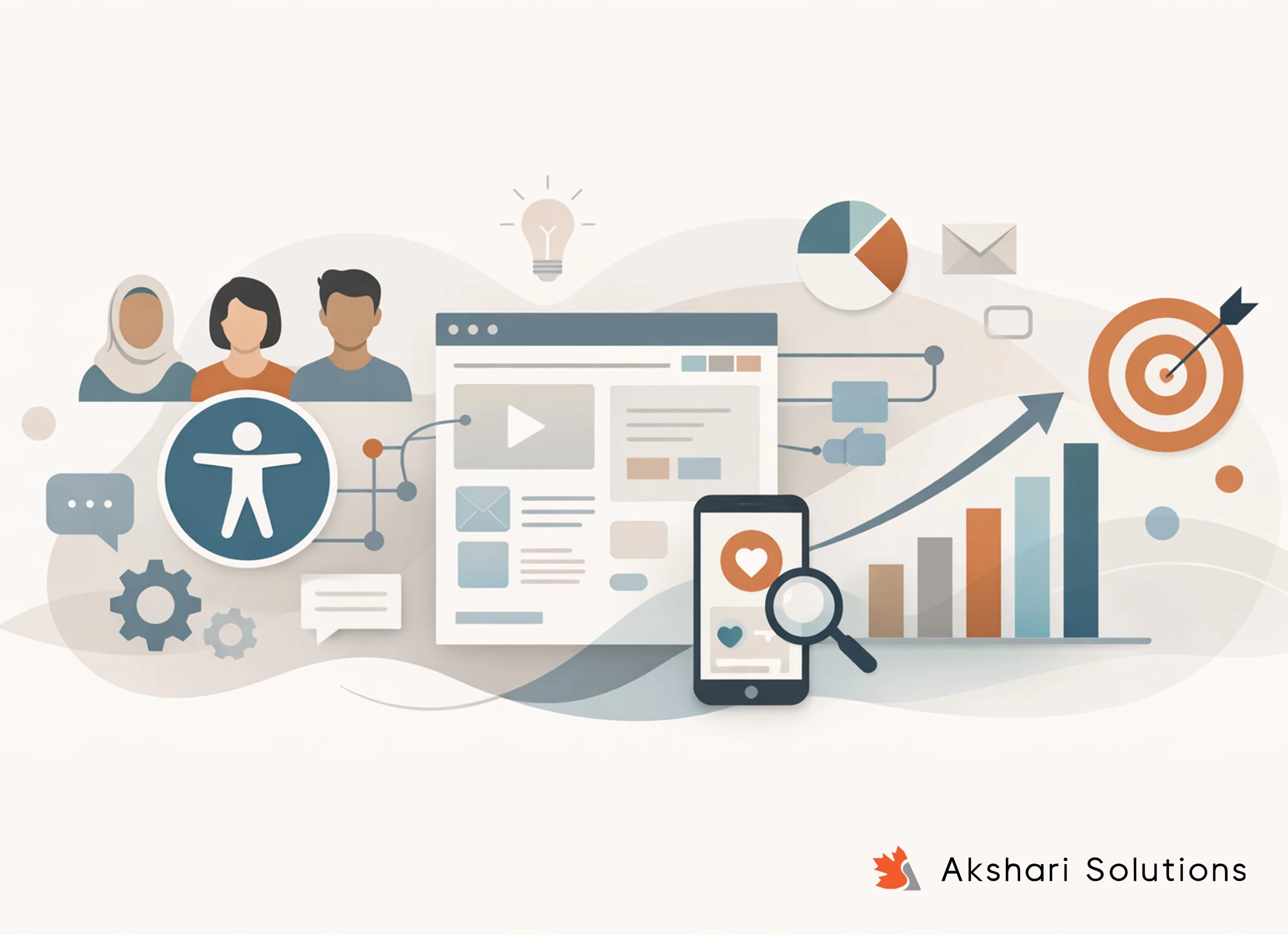
As a business owner, you’ve experienced firsthand how quickly digital trends evolve. But there’s one shift that’s not just a “trend”. It’s a business imperative for 2026 and beyond. I’m talking about the intersection of inclusive branding, accessible web design, and strategic digital marketing and why this trifecta is quietly reshaping how brands grow, attract customers, and boost revenue.
When you build your brand and digital presence with every audience in mind, not just the average user, you unlock powerful benefits: stronger SEO, better UX, deeper customer loyalty, and a brand reputation that resonates across diverse communities.
Let’s explore why inclusivity isn’t just nice to have. It’s a growth strategy.
What Inclusive Branding Really Means
Most people think of accessibility as a compliance checklist: alt tags here, contrast checks there. But inclusive branding goes beyond technical requirements. It’s about how your brand makes people feel, engage, and belong.
Inclusive branding:
Speaks in a clear, human voice that welcomes diverse users.
Considers cultural and cognitive differences in tone and message.
Embeds accessibility into the brand narrative instead of treating it as an add‑on.
Brands that do this aren’t just avoiding exclusion. They're building stronger emotional connections with customers from all walks of life. Nearly 70% of consumers say diversity, equity, and inclusion impact their brand choices, and many will pay more for brands that reflect these values.
By intentionally designing your brand around human diversity, you reinforce trust and credibility and that’s a strong competitive advantage.
Inclusive Web Design = Better UX + Better SEO
Let’s be clear: accessible web design isn’t a box‑checking exercise. It improves user experience for everyone — not just users with disabilities. Features like logical heading structures, descriptive link text, keyboard navigation, and proper contrast help all visitors navigate your site more easily.
And because these features also align with how search engines crawl and understand your site, accessibility becomes an SEO booster too:
Semantic HTML and clear structure help search engines interpret your content better.
Alt text and descriptive labels increase relevance signals for visual content.
Fast load times and responsive design are both accessibility and search ranking factors.
These improvements can significantly increase organic visibility, engagement, and conversions.
According to research, accessible websites often experience measurable lifts in organic traffic once accessibility fixes are implemented.
UI/UX Isn’t Just Pretty. It’s Strategic
In your business, UI/UX shouldn’t be about aesthetics alone. It’s about clarity, efficiency, and delight for every user.
Think of UX as your 24/7 salesperson: if your interface confuses visitors, they leave fast. But when UI/UX is intuitive, inclusive, and welcoming, you reduce friction throughout the customer journey.
Here’s how inclusive UX reinforces growth:
Clear visual hierarchy guides users to essential information.
Consistent navigation patterns reduce cognitive load.
Accessible interactions (keyboard, touch, voice) make your site usable for everyone.
Mobile‑friendly design expands reach to the broad majority of users.
Inclusive UX is especially powerful when paired with thoughtful branding because every interaction becomes a reinforcement of your brand promise not just a functional user task.
Digital Marketing Amplifies the Impact
Once your brand, web design, and UX are inclusive and optimized, you unlock more effective digital marketing performance.
Here’s why:
Your SEO is stronger, more organic traffic means higher quality leads.
Accessible content is more shareable and engaging across platforms.
Inclusive messaging resonates with a broader audience, improving ad performance and lowering acquisition costs.
In practical terms, inclusive digital marketing means:
Producing content that speaks to diverse customer needs.
Running campaigns that reflect different cultural contexts.
Making sure your videos, ads, and social posts are accessible (captions, readable language, alt text).
Tracking conversion paths to see where inclusivity strengthens engagement.
Inclusive strategy doesn’t sacrifice creativity. It enhances relevance.
Real Use Case: A Small Business Growth Story
Imagine a local fitness brand that redesigns its website and digital campaigns with inclusive principles:
The site gets a full accessibility audit (semantic HTML, alt text, keyboard navigation).
UI/UX improvements reduce bounce rates by making navigation clearer.
SEO improvements increase search visibility for key brand terms.
Digital ads are tailored with inclusive language and imagery that resonates across age groups.
Over six months, the business sees:
A measurable increase in organic search rankings.
Higher engagement on social channels.
Better customer satisfaction scores.
Increased online bookings thanks to easier navigation.
This isn’t hypothetical, inclusive design and marketing consistently lead to broader reach, stronger conversions, and greater loyalty.
Practical Steps to Get Started Today
If you’re ready to make inclusive branding and web design part of your growth plan, start with these tactical moves:
Audit your current site, accessibility tools and testing.
Review your brand voice for clarity and inclusivity.
Update your UI/UX elements with accessibility best practices.
Integrate accessibility checks into your digital campaigns and SEO workflows.
Measure impact, track engagement, rankings, and conversion data.
This holistic approach turns inclusivity into a strategic asset, not just a compliance task.
Conclusion: Build a Brand That Welcomes Everyone
In 2026, brands that grow fastest won’t be the flashiest. They'll be the most inclusive. When your branding, web design, UI/UX, accessibility, and digital marketing work together, you create experiences that resonate with real people and search engines notice too.
If you want help turning inclusion into a growth strategy not just a checklist we’re here to partner with you.
📈 Let’s build a brand and digital presence that truly reflects who you are and who you want to reach.
Ready to get started? Visit our Branding services or explore our Web Design & Development offerings and Digital Marketing services to see how we can help you create inclusive growth.