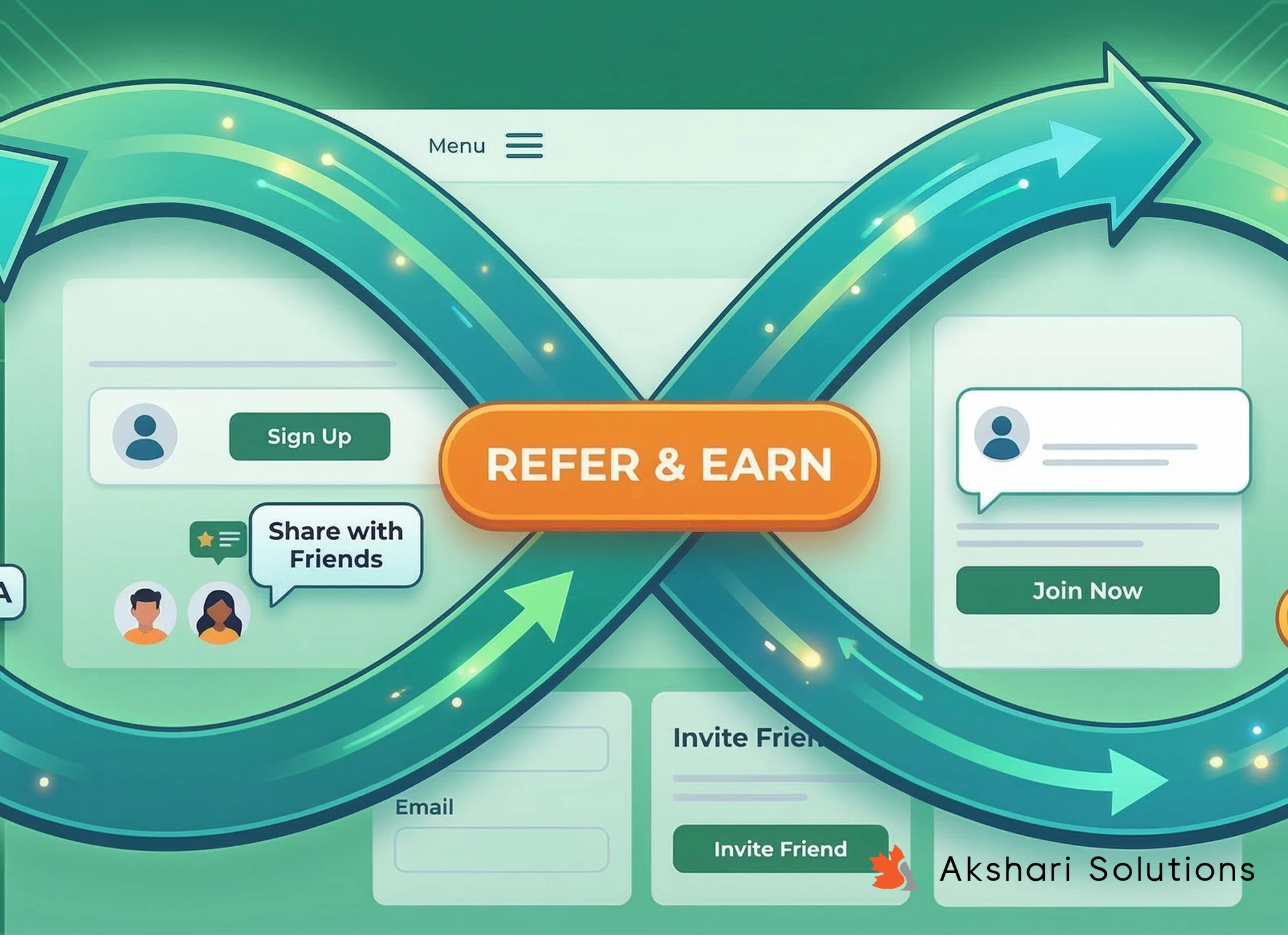
How to Build a Referral Loop into Your Website UX
One of the most valuable marketing channels a business can have isn’t paid ads, SEO, or social media.
It’s word of mouth.
When someone recommends your brand to a colleague, friend, or business partner, it carries a level of trust that advertising simply can’t replicate. In fact, research from Nielsen shows that people trust recommendations from people they know more than any other form of marketing.
But here’s something many companies overlook: referrals rarely happen by chance. They happen when the experience makes sharing feel natural.
That’s where a referral loop comes in.
A well-designed website doesn’t just convert visitors. It quietly encourages them to share the experience with others. When done right, your website becomes a system where satisfied users naturally bring in new users, creating steady, organic growth.
Let’s look at how to build that kind of system directly into your website UX.
What Is a Referral Loop?
A referral loop is exactly what it sounds like, a cycle where people discover your website, have a positive experience, recommend it to others, and bring in new visitors who repeat the same process.
Think of it like this:
Someone discovers your website
They find something genuinely useful
The site makes sharing easy
They recommend it to someone else
A new visitor arrives, and the loop starts again
Companies like Dropbox and Airbnb famously grew through referral-driven product design. But the concept applies just as much to service businesses, agencies, and content-driven websites.
HubSpot has a helpful breakdown of how referral programs drive growth here.
The key idea is simple: good UX removes friction between a positive experience and a recommendation.
Make Sharing Almost Effortless
If sharing your website takes effort, most people won’t bother.
That’s not a criticism of your audience. It’s just human nature.
Simple UX touches can make a big difference:
Social sharing buttons on blog articles
A quick “copy link” option
Easy email sharing for useful resources
Subtle prompts like “Share this with someone who might find it helpful”
This is particularly powerful for companies investing in content marketing and thought leadership. When people read something genuinely helpful, they often want to pass it along.
Businesses focusing on strong web design and digital marketing strategies often see the biggest benefits.
The easier it is to share, the more often people will.
Ask at the Right Moment
Timing matters more than most websites realize.
People are most likely to recommend something immediately after a positive experience.
That might be:
After downloading a useful guide
After reading an insightful blog article
After completing a purchase
After getting helpful information
Instead of interruptive pop-ups, subtle prompts work best.
Something simple like:
"Know someone who might find this useful? Feel free to share it."
It’s friendly, natural, and it respects the user’s experience.
Trust Is the Real Trigger for Referrals
Here’s the truth: people only recommend brands they trust.
Your website UX plays a huge role in creating that trust.
A few things that consistently influence whether people feel comfortable recommending a brand:
Clear messaging
Professional design and branding
Fast-loading pages
Mobile-friendly layouts
Real testimonials and case studies
According to insights from Smashing Magazine, strong UX design significantly influences how users perceive credibility and trustworthiness online.
In other words, good design isn’t just about aesthetics. It’s about confidence.
And confidence is what makes someone say, “You should check this out.”
Incentives Can Help — But They’re Not Always Necessary
Some businesses build referral loops with incentives.
Things like:
Discount codes for referrals
Loyalty rewards
Bonus resources
Early access to products or features
These can be effective, especially in e-commerce or SaaS.
But interestingly, many referrals happen without incentives when the experience itself is valuable enough.
If people genuinely like what you offer, they’ll often share it anyway.
Create Content Worth Sharing
One of the simplest ways to encourage referrals is to publish content that actually helps people.
Not generic marketing content — but insights that are:
Practical
Educational
Thought-provoking
Easy to understand
Google’s own guidance for helpful content emphasizes creating material that genuinely benefits readers rather than simply chasing rankings.
When useful content is combined with strong UX design, sharing becomes a natural outcome.
People recommend things that make them look helpful or informed.
Where Referral UX Is Heading
We’re seeing an interesting shift in how companies approach referrals.
Instead of traditional referral programs alone, many brands are now focusing on experience-driven referrals.
Some emerging trends include:
Product-driven referrals
Where users invite others directly through the platform.Community referrals
Sharing resources within professional groups or niche communities.Embedded sharing features
Tools that track referrals automatically without adding complexity.
As competition online continues to grow, these kinds of built-in referral experiences will become a core part of modern website strategy.
Final Thoughts
The most effective referral strategies rarely feel like marketing.
They simply come from great experiences people want to share.
When your website combines thoughtful UX, strong branding, and genuinely helpful content, referrals begin to happen naturally.
And over time, those small moments of sharing create one of the most powerful growth engines any business can have.
If you're thinking about building a website that supports long-term growth, thoughtful user experiences, and stronger digital marketing performance, explore the approach taken by Akshari Solutions.
Because the best websites don’t just attract visitors.
They turn them into advocates.